Is managing who gets into your parking lot becoming more difficult than it should be?
Your team may be trying to remember who still has a gate remote. A shared code may have been passed around too many times. Visitors and delivery drivers may regularly need help at the entrance. Perhaps the gate works one day and causes delays the next.
When these problems become part of the normal workday, the parking-access system may no longer fit the way the property operates.
The right next step could be a targeted upgrade, replacement of an outdated system, or a new vehicle-access solution. That decision should be based on the entrance, traffic flow, existing equipment, visitor needs, and how authorized users are managed.
Why Parking Access Problems Matter
A parking lot, garage, loading area, or gated driveway is often the first controlled entrance people encounter.
When vehicle entry does not work properly, the effects extend beyond the parking area. Traffic backs up. Visitors call the front desk. Employees arrive late. Property managers spend time replacing remotes, updating codes, or responding to unauthorized parking.
A reliable system should make access easier to manage without creating unnecessary delays for the people who are supposed to enter.
Signs Your Parking Access System May Need Attention
You do not need to wait for a gate to stop working completely. Smaller frustrations often indicate that the current system no longer supports the property effectively.
- No one is sure which remotes, fobs, tags, or codes are still active. Employees leave, tenants change, credentials go missing, and old access is not always removed promptly.
- A shared gate code is no longer private. Once a code has circulated among staff, residents, contractors, vendors, and guests, controlling who knows it becomes difficult.
- Visitors regularly get stuck outside. Guests, delivery drivers, service providers, and contractors do not have a clear way to request entry.
- Unauthorized vehicles keep appearing. Restricted or reserved areas are regularly being used by vehicles that should not be there.
- The gate works inconsistently. Some users can enter while others cannot, or the gate arm opens, closes, or responds unpredictably.
- Different entrances use different procedures. One gate requires a remote, another uses a code, and a third depends on staff assistance.
- The property has outgrown the system. More employees, tenants, vehicles, deliveries, or visitors are placing demands on a setup designed for a smaller operation.
- The equipment is becoming difficult to support. Replacement parts, compatible credentials, or reliable technical support may no longer be readily available.
These problems do not always require replacing everything at once. They do indicate that the entrance and access process should be evaluated.
What Better Vehicle Access Can Look Like
There is no single parking-control system that fits every property.
A commercial facility may have different requirements from a condominium, hotel, industrial site, government property, or multi-tenant building. The system should reflect who uses the entrance, how often credentials change, how visitors are handled, and how traffic moves through the property.
Better Control of Remotes, Codes, and Credentials
Gate remotes, cards, fobs, vehicle tags, and access codes can all work well when they are managed consistently.
Property managers should be able to answer practical questions:
- Who currently has access?
- How is a lost credential removed?
- What happens when an employee leaves or a tenant moves?
- Who is responsible for approving new access?
- How are temporary users and vendors handled?
If those answers are unclear, an upgrade may need to address the credential-management process as well as the entrance equipment.
Hands-Free Vehicle Entry With RFID
If regular users must stop, lower a window, enter a code, or search for a remote each time they arrive, RFID may provide a more convenient option.
RFID stands for radio-frequency identification. A small vehicle tag, often placed on the windshield, communicates wirelessly with an RFID reader near the entrance. When the system recognizes an authorized credential, it can signal the parking gate to open without requiring the driver to enter a code or press a remote.
Access Hardware works with equipment such as the TransCore Encompass 4 RFID reader and EGo Plus Micro Mini windshield tags. Whether this type of system fits a property depends on the entrance layout, traffic volume, desired reading distance, existing gate equipment, and how visitor access will be handled.
Learn more about parking controls and RFID vehicle access.
A Clear Process for Visitors and Deliveries
Employees, tenants, and residents may use the same entrance every day. Visitors need a different way to request access.
Depending on the property, that process may involve a keypad, call box, telephone-entry system, or intercom. The objective is to give guests, vendors, contractors, and delivery drivers clear instructions without requiring staff to interrupt their normal responsibilities whenever someone arrives.
Visitor entry should be considered during the initial planning. A system that works well for regular authorized users may still create delays if occasional visitors have no practical way to enter.
The Gate Arm and Operator Still Matter
When someone says, “The parking gate is not working,” the problem may involve more than the remote, keypad, or vehicle tag.
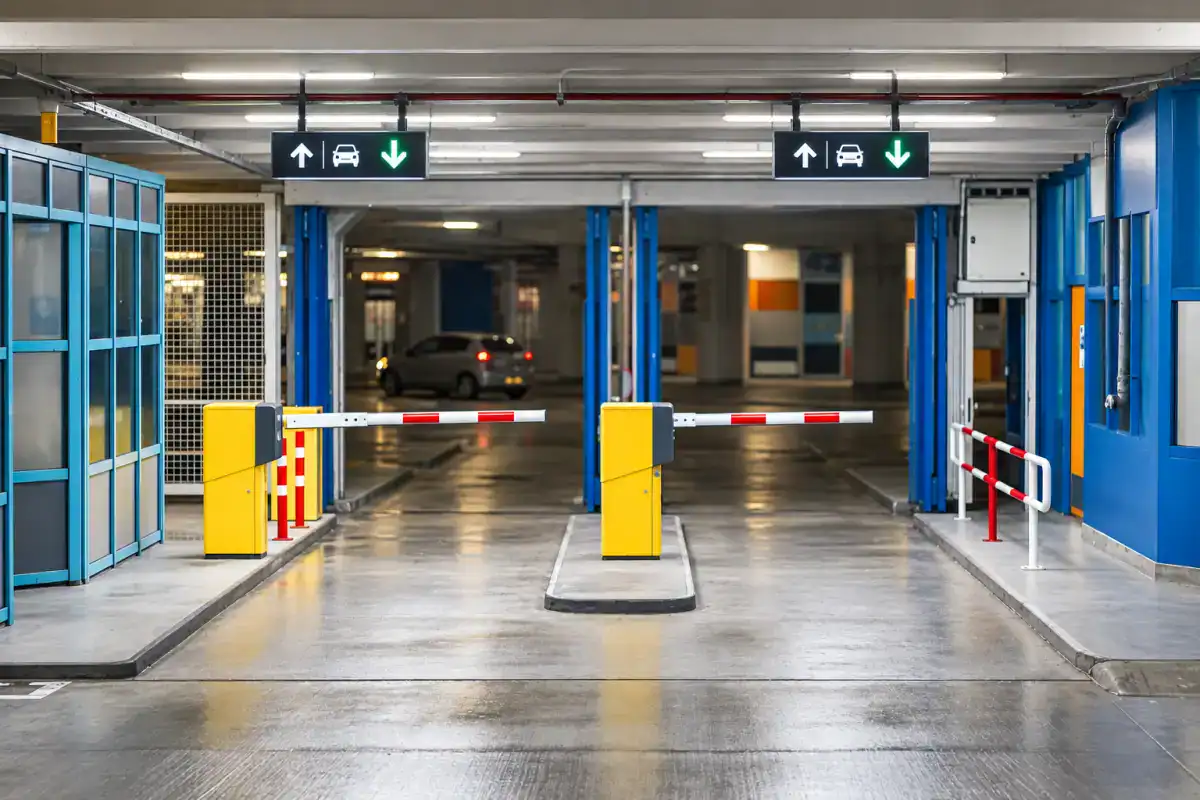
A barrier arm gate includes the visible arm that controls the lane and the gate operator that raises and lowers it. Readers, controls, safety devices, wiring, and the physical entrance layout can also affect how reliably the system works.
Replacing one part of an aging system may not resolve broader problems with outdated controls, unsupported equipment, inconsistent credentials, or an entrance that no longer accommodates current traffic.
Access Hardware works with parking equipment such as DoorKing barrier arm gate operators. Equipment should be selected only after the entrance, existing system, and traffic needs are evaluated.
Centralized Access Management
Properties with multiple gates or frequently changing users may benefit from managing vehicle access through a more centralized system.
Depending on the selected platform and configuration, authorized staff may be able to add or remove credentials, manage access permissions, or review access activity without maintaining separate processes for every entrance.
These capabilities vary by system. Existing equipment, connectivity, administrative needs, and staff responsibilities should be reviewed before a platform is recommended.
What to Note Before Requesting an Assessment
A few safe observations can help clarify whether the problem is limited to one part of the entrance or reflects a larger system issue.
Before requesting an assessment, note:
- Which gate, lane, or entrance is affected
- Whether the problem affects everyone or only certain remotes, tags, or codes
- Whether the issue is constant or intermittent
- Whether it happens at a particular time of day or during heavy traffic
- Whether rain, wind, or other weather appears to coincide with the problem
- Any visible damage, unusual sounds, warning lights, or display messages
- Whether the gate arm begins moving and stops or does not respond at all
- Whether visitors, regular users, or both are affected
- Whether the same problems have happened repeatedly
- Whether the equipment or access process has kept pace with changes at the property
Do not open equipment cabinets, adjust safety devices, change access-control settings, or attempt to work on the operator or wiring.
If the gate is moving unpredictably or presents an immediate safety concern, keep people and vehicles clear of the equipment until it can be professionally evaluated.
How Parking Access Connects With Other Systems
Vehicle entry does not always operate independently from the rest of the property.
- Card access control can manage approved users at building doors and restricted areas while parking controls manage vehicle entry.
- Telephone entry and intercom systems can let visitors at the gate contact the appropriate resident, tenant, office, or staff member.
- Security cameras can provide visual context at gate lanes, garage entrances, loading areas, and other important access points.
Coordinating related systems may make multiple entrances easier to manage. Improvements can also be completed in phases, beginning with the gate or access point creating the most disruption.
Why Hawaii Conditions Matter
Outdoor parking equipment in Hawaii may be exposed to strong sun, humidity, heavy rain, salt air in coastal areas, wind, and frequent vehicle traffic.
These conditions can affect the selection, placement, installation, and maintenance of gate operators, RFID readers, enclosures, wiring, and related equipment.
An exposed coastal entrance may have different needs from a gate inside a covered garage. A high-traffic commercial entrance will also place different demands on equipment than a lower-volume property.
The environment and daily use of the entrance should be considered before new equipment is selected.
Does the Property Need an Upgrade, Replacement, or New Installation?
The scope of the project should reflect both the immediate problem and how the property needs to operate going forward.
A Targeted Upgrade May Make Sense When
- Remotes or shared codes have become difficult to control.
- The property needs a better way to manage authorized vehicles.
- Regular users would benefit from hands-free RFID access.
- Visitors need a clearer way to request entry.
- One entrance or part of the access process is creating most of the difficulty.
- Existing equipment can support the planned improvement.
A focused upgrade may address the immediate operational problem without replacing equipment that continues to meet the property’s needs.
Replacement May Be the Better Option When
- Gate problems continue to disrupt vehicle entry.
- Multiple components are aging, inconsistent, or difficult to support.
- Compatible credentials or replacement components are becoming harder to obtain.
- The existing system cannot support current traffic or access-management needs.
- Staff must rely on workarounds to keep the entrance operating.
- The property wants to coordinate parking access with newer card-access, visitor-entry, or camera systems.
A replacement plan can address the complete entrance rather than continuing to work around the limitations of an outdated system.
A New Installation May Be Appropriate When
- A parking area or driveway does not currently have controlled vehicle access.
- A new building, parking structure, or gated entrance is being planned.
- The property needs to separate employee, tenant, visitor, vendor, or delivery access.
- Additional lanes or entrances are being added.
- Parking controls are part of a larger security, access-control, or renovation project.
Planning the vehicle entrance alongside the property’s other access points can prevent disconnected systems and inconsistent procedures later.
Make Parking Access Easier to Manage
If shared codes, uncontrolled credentials, visitor delays, recurring gate problems, or outdated equipment are creating extra work, it may be time to consider an upgrade or replacement.
Access Hardware Inc. is a licensed and insured Hawaii security systems contractor serving Oahu and Maui since 1989. The team can evaluate the entrance, traffic flow, existing equipment, credential process, visitor needs, and related systems before recommending a targeted upgrade, replacement system, or new installation.
Schedule a free consultation to discuss parking controls, barrier arm gates, RFID vehicle access, and the needs of your property.